
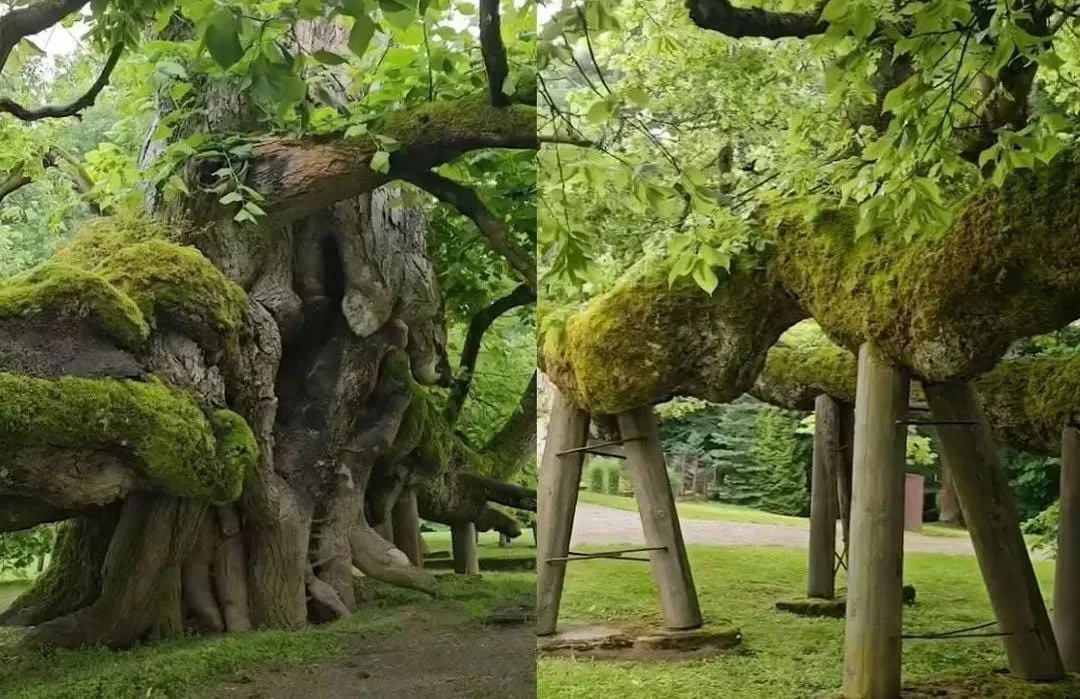
Kamenice nad Lipou An ancient linden tree estimated to be around 820 years old has captured renewed public attention after a recent video of the massive, moss-covered giant went viral online. The tree, located in the garden of the Kamenice nad Lipou Castle in the Vysočina region of the Czech Republic, is considered one of the town’s most treasured natural landmarks.
The town itself derives part of its name from this historic tree, and for centuries the linden has been regarded as a symbol of identity for the local community. Visitors and nature observers frequently describe it as a “living masterpiece,” admired for its immense crown, gnarled trunk, and remarkable longevity.
To protect the aging tree from structural collapse, several wooden supports have been installed beneath its sprawling branches. These reinforcements are part of ongoing conservation efforts, as the tree’s vast limb weight and natural hollowing make it vulnerable to damage from weather and age.
Although many public sources claim the tree is over eight centuries old, no formal dendrochronological study has yet been published to confirm its precise age. Even so, botanists and conservation specialists note that the estimate is plausible based on the tree’s size, growth patterns, and long-recorded presence in the castle grounds.
The linden’s popularity surged again after a video posted by creator Iva LinhArt circulated widely on social media. In the caption, LinhArt described the tree as an “úžasná bytost” “a breathtaking being” reflecting the deep public admiration for the ancient specimen.
As Europe faces mounting pressures from climate change, habitat loss, and the decline of old-growth trees, the linden in Kamenice nad Lipou stands as a compelling example of successful long-term heritage tree preservation. Local authorities and castle administrators have expressed continued commitment to safeguarding the tree for future generations.
Today, the centuries-old linden remains a key cultural landmark, a quiet ecological relic, and one of the most striking natural features of the region a testament to the enduring bond between people and the landscapes that shape their history.